The typical high school movie has a plot line that goes like this: Students collectively arrive at standards for deciding a status order for the group. Good looks, athleticism, and social skills typically form the standards by which each student is ranked. The high-status people form an in-group with a very strict social boundary, keeping the majority of lower-status students in the out-group. The cool people constantly pick on the nerds and remind the latter that they would like to join the in-group but will never be allowed to do so. After considerable abuse, the nerds commiserate with one another and form a mutual support group. As the drama unfolds, the cool people turn out to be shallow and not very intelligent. The nerds, by contrast, reveal themselves to be deep, authentic, capable of true friendship, and, above all, intelligent. These qualities allow them to defeat the cool people at their own game (Revenge of the Nerds).
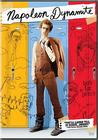
The happy ending is perfect when one of the cool people realizes that the people in his social group are shallow. By joining the nerds, the nerds become cool. For the first three quarters of his high-school flick, the 24-year-old writer and director Jared Hess breaks radically with this plot line. The cool people in his Idaho small town are barely cool. And the nerds and their low-income families are really dumb. Napoleon Dynamite is one of them. Napoleon cannot lead himself and is very slow. The film tries to achieve a comic effect by focusing the camera on the dreary and boring daily routines of the nerds and the families in which they were socialized. Hess studies in detail how their bodies move clumsily through the world, which they are not able to master. Hess’s film is radical in suggesting that the stupidity of his nerds is what leads to their marginal existence rather than the mean and exploitative actions of the high-status people. Although presenting a novel narrative strategy, seeing marginal people do stupid things is not much fun. I suspect that the financiers of the movie told Hess that his depressing tale needed a happy ending. For the last quarter of the film, Napoleon Dynamite returns to the standard plot line of a high-school movie, providing laughs and a happy ending but destroying the artistic integrity of the movie. As a piece of art, the film fails because Hess is not able to go beyond showing scenes from the place he grew up in. At the end, you wonder what the meaning of it all was supposed to be.