Louis Menand reviews two recent books of quotations in the New Yorker. After reading his fun review, I really want these two books for my library. Anyone forgot my birthday?
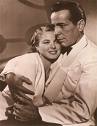
Sherlock Holmes never said “Elementary, my dear Watson.” Neither Ingrid Bergman nor anyone else in “Casablanca” says “Play it again, Sam”; Leo Durocher did not say “Nice guys finish last”; Vince Lombardi did say “Winning isn’t everything, it’s the only thing” quite often, but he got the line from someone else. Patrick Henry almost certainly did not say “Give me liberty, or give me death!”; William Tecumseh Sherman never wrote the words “War is hell”; and there is no evidence that Horace Greeley said “Go west, young man.” Marie Antoinette did not say “Let them eat cake”; Hermann Goring did not say “When I hear the word ‘culture,’ I reach for my gun”; and Muhammad Ali did not say “No Vietcong ever called me nigger.” Gordon Gekko, the character played by Michael Douglas in “Wall Street,” does not say “Greed is good”; James Cagney never says “You dirty rat” in any of his films; and no movie actor, including Charles Boyer, ever said “Come with me to the Casbah.” Many of the phrases for which Winston Churchill is famous he adapted from the phrases of other people, and when Yogi Berra said “I didn’t really say everything I said” he was correct.
So what? Should we care? Quotable quotes are coins rubbed smooth by
circulation. What Michael Douglas did say in “Wall Street” was “Greed, for lack
of a better word, is good.” That was not a quotable quote; it needed some
editorial attention, the consequence of which is that everyone distinctly
remembers Michael Douglas uttering the words “Greed is good” in “Wall Street,”
just as everyone distinctly remembers Ingrid Bergman uttering the words “Play
it again, Sam” in “Casablanca,” even though what she really utters is “Play it,
Sam.” When you watch the movie and get to that line, you don’t think your
memory is wrong. You think the movie is wrong.
“For lack of a better word” spoils a nice quotation—the speech is about
calling a spade a spade, so there is no better word—and “Play it again, Sam”
is somehow more affecting than “Play it, Sam.” But not all emendations are
improvements. What Leo Durocher actually said (referring to the New York Giants
baseball team) was “The nice guys are all over there, in seventh place.” The
sportswriters who heard him telescoped (the technical term is “piped”) the
quote because it made a neater headline. They could have done a better job of
piping. “Nice guys finish seventh” is a lot cleverer (and also marginally more
plausible) than the non-utterance that gave immortality to Leo Durocher. But
Leo Durocher doesn’t own that quotation; the quotation owns Leo Durocher, the
way a parasite sometimes takes over the host organism. Quotations are in a
perpetual struggle for survival. They want people to keep saying them. They
don’t want to die any more than the rest of us do. And so, whenever they can,
they attach themselves to colorful or famous people. “Nice guys finish last”
profits by its association with a man whose nickname was the Lip, even if the
Lip never said it, just as “Winning isn’t everything” has a higher market
valuation because of the mental image people have of Vince Lombardi. No one has
a mental image of Henry (Red) Sanders, the coach who used the phrase first.
The adaptive mechanism benefits both parties. The survival of the quotation
helps insure the survival of the person to whom it is misattributed. The
Patrick Henry who lives in our heads and hearts is the man who said “Give me
liberty, or give me death!” Apparently, the line was cooked up by his
biographer William Wirt, a notorious embellisher, who also invented Henry’s
other familiar quotation, “If this be treason, make the most of it!” But a
Patrick Henry who never said “Give me liberty, or give me death!” or “If this
be treason, make the most of it!,” a Patrick Henry without a death wish, is
just not someone we know or care about. His having been said to have said what
he never said is a condition of his being “Patrick Henry.” Certain sayings,
like “It’s deja vu all over again,” are Berra-isms, whether Yogi Berra ever
said them or not. “Je ne suis pas marxiste,” Karl Marx once complained. Too
late for that. Like Yogi, he was the author of a discourse, and he lives as
long as it does.
Karl Marx has thirteen quotations (plus eight for which he shares credit with
Friedrich Engels, who, interestingly, never felt it necessary to say “Je ne
suis pas engeliste”) in the compendious, enjoyable, and expensive “Yale Book of<br />
Quotations” (Yale; $50), edited by Fred Shapiro. Groucho Marx (no relation) has
fifty-one quotations. The big winner is William Shakespeare, with four hundred
and fifty-five, topping even the Yahwist and his co-authors, the wordsmiths who
churned out the Bible but managed to come up with only four hundred quotable
passages. Mark Twain has a hundred and fifty-three quotations, Oscar Wilde a
hundred and twenty-three. Ambrose Bierce edges out Samuel Johnson in double
overtime by a final score of a hundred and forty-four to a hundred and ten. And
Woody Allen has forty, beating out William Words-worth, Rudyard Kipling, and
both Roosevelts.
Shapiro, a librarian at the Yale Law School, is an attribution hound, as is
Ralph Keyes, a quotation specialist and the author of “The Quote Verifier” (St.
Martin’s; $15.95). “Misquotation is an occupational hazard of quotation,” Keyes
advises, and both he and Shapiro have gone to considerable trouble to track
down the original utterances that became famous quotations and their original
utterers. Keyes finds that quotations tend to mutate in the direction of
greater pith. He offers the original words of Rodney King as an instance:
“People, I just want to say, you know, can we all get along? Can we get along?
Can we stop making it, making it horrible for the older people and the kids? .
. . Please, we can get along here. We all can get along. I mean, we’re all
stuck here for a while. Let’s try to work it out. Let’s try to beat it. Let’s
try to beat it. Let’s try to work it out.” This is the rambling outburst that
became the astringent and immortal “Can’t we all get along?” Keyes calls the
process “bumper-stickering.” It worked well for Rodney King.
Shapiro gives us results of similar detective work, and he offers additional
scholarly fruit in the form of citations for the first appearance of many well-
known terms, slogans, and catchphrases. “This book takes a broad view of what
constitutes a quotation,” he explains. The Internet has helped him out, and a
lot of the stuff he has come up with is pretty irresistible. It is extremely
interesting to know, for instance, that the phrase “Shit happens” was
introduced to print by one Connie Eble, in a publication identified as “UNC-CH
Slang” (presumably the University of North Carolina at Chapel Hill), in 1983.
“Life’s a bitch, and then you die,” a closely related reflection, dates from
1982, the year it appeared in the Washington Post. “Been there, done that”
entered the public discourse in 1983, via the Union Recorder, a publication out
of the University of Sydney. “Get a life”: the Washington Post, 1983. (What is
it about the nineteen-eighties, anyway?) “Size doesn’t matter,” a phrase, or at
least a hope, that would seem to have been around since the Pleistocene, did
not see print until 1989, rather late in the history of the species, when it
appeared in the Boston Globe.
There are some neat finds and a few surprises (to me, anyway) in the Yale book.
I did not know that Billy Wilder was the person who said that hindsight is
always 20/20. “There ain’t no such thing as a free lunch” is attributable to a
journalist named Walter Morrow, writing in the San Francisco News in 1949. We
owe the useful phrase “Sue the bastards!” to Victor J. Yannacone, Jr.,
identified as a U.S. lawyer and environmentalist. It was Jack Weinberg, of the
Berkeley Free Speech Movement, who first said “You can’t trust anybody over
thirty.” Joey Adams gets the credit for “With friends like that, who needs
enemies?” The phrase “You can’t go home again” was given to Thomas Wolfe by the
writer Ella Winter. It was the wonderful story writer John McNulty, and not
Yogi Berra, who was responsible for “Nobody goes there anymore. It’s too
crowded.” “I’m not really a Jew. Just Jew-ish”: Jonathan Miller, in “Beyond the
Fringe.” And the first person to call a spade a spade? That’s right, it was
Erasmus.
Shapiro has a good ear for the quote bites of contemporary celebrity culture,
and the courage to set out on this endless sea. Donald Trump appears twice, for
“Deals are my art form” and (in a section headed “Television Catchphrases”)
“You’re fired!” Cherilyn Sarkisian LaPierre, known to most of us as Cher, is
included for the lines “Mother told me a couple of years ago, ‘Sweetheart,
settle down and marry a rich man.’ I said, ‘Mom, I am a rich man.’ ” (The great
Sonny Bono, on the other hand, is sadly missing and deeply missed. What about
“The beat goes on”? “I got you, babe”? Jingles that got us through some unhappy
hours.) Zsa Zsa Gabor, asked how many husbands she has had, said, “You mean
apart from my own?” Tug McGraw, asked what he would do with the salary he was
making as a pitcher, said “Ninety percent I’ll spend on good times, women, and
Irish whiskey. The other ten percent I’ll probably waste.” “I ate a whole
chocolate bar” was Claudia Schiffer’s comment after her retirement from the
catwalk. There are separate sections in the Yale book for “Star Trek” (ten
items, including “Live long and prosper” and “He’s dead, Jim”; Gene Roddenberry
has a section of his own), for “Advertising Slogans” (immediately fol-lowing
the section for Theodor Ador-no, who would have grimly appreciated the irony
and probably composed an incomprehensible aphorism about it), for “Sayings”
(“No more Mr. Nice Guy”: New York Times, 1967), for “Political Slogans,” and
for “Film Lines.” I’m not sure that the sentence spoken by L. Paul Bremer III
upon the capture of Saddam Hussein, “Ladies and gentleman, we got him,” is all
that deathless, but I’m quite pleased with the single quotation attributed to
Richard B. Cheney, iden-tified as a U.S. government official, and dated May 30,
2005: “The insurgency is in its last throes.”
It is tiresome to encounter, for the millionth time (J. Joyce), George
Santayana’s tiresome mot “Those who cannot remember the past are condemned to
repeat it” (manifestly untrue any way you look at it). And it is annoying to
reread Alfred North Whitehead’s pompous bouleversements: “There are no whole
truths; all truths are half-truths”; “Everything of importance has been said
before by somebody who did not discover it.” But if sententious paradoxes get
endlessly circulated, that is not the editor’s fault. Wilde was an epigrammatic
genius, it’s true, but too large a dose may cause stomach upset. Shapiro is
interested in the sociology of knowledge (which is precisely where the study of
quotation belongs), so there are quotations from Robert K. Merton, George
Sarton, and Talcott Parsons, but relatively less attention is given to other
academic figures. (Stanley Fish does not appear, though it can’t be for lack of
material. Edward Said does.) There is inevitably a problem in the case of
people who are the quotation equivalent of vending machines. Charles Dickens,
for example, or Bob Dylan, who is represented by a list of twenty-seven
quotations that will seem, to anyone who is a Dylan listener, hopelessly
arbitrary. It should all be here, every line!
In fact, though it is ungracious to say, a lot of the fun of this fun book is
in second-guessing the editor. Virginia Woolf’s quotations include the first
sentence of “Mrs. Dalloway” (“Mrs. Dalloway said she would buy the flowers
herself”) but not the equally famous last sentence of “To the Lighthouse” (“She
had had her vision”). Franz Kafka, a deep mine of quotability, has just eleven
entries, and it is disappointing that one of them is not “It is enough that the
arrows fit exactly in the wounds that they have made.” There are two quotations
from William James on the subject of truth, but not the most elegant of his
formulations: “The true is the name for whatever proves itself to be good in
the way of belief.” Guy Debord, a brilliant aphorist who coined the phrase
“society of the spectacle,” is represented only by a late and dubious quotation
about quotations. (“Quotations are useful in periods of ignorance or
obscurantist beliefs.”) The section for Justice Oliver Wendell Holmes, Jr.—
like his father an inexhaustible fount of one-liners—lacks the always apt
reminder that “certitude is not the test of certainty.” The philosopher Sidney
Morgenbesser, whose offhand remarks were celebrated enough to have been
collected, is here only for his famous retort to a speaker who had said that
although there are many cases in which two negatives make a positive, he knew
of no case in which two positives made a negative (“Yeah yeah”). Samuel Beckett
has only nine quotations, most of them from “Waiting for Godot.” We miss his
remark about what it will be like in the afterlife: “We’ll sit around talking
about the good old days, when we wished that we were dead.” Goethe has twenty-
six entries, including one that was new to me (the attribution, not the
sentiment): “He can lick my ass” (1773). But a line from “Wilhelm Meister” that
has given me resolve is not here: “Action is easy; thought is hard.” We miss
Henri Bergson’s gnomic observation “The universe is a machine for the making of
gods.” There is a large woodpile of Robert Frost lines, but the couplet that
ends “The Tuft of Flowers”—“Men work together, I told him from the heart, /
Whether they work together or apart”—is not in it.
Poetry is, admittedly, an insuperable problem for quotation compilers. The
feeling that the top of your head has been taken off, a definition of what
makes a quote quotable that Shapiro takes from Emily Dickinson (who took it,
basically, from Kant and Burke, who took it from Longinus—a nice example of
the sociology of quotation), is a feeling that readers of poetry expect from
every poem they read. They are in the game to look for the strong line. But—
and now we are getting to the theoretical heart of the Problem of Quotation—
the experience of sublimity is subjective and associational. For some reason, a
string is plucked and it never stops vibrating. Who knows why, exactly?
Everyone has a list. “My glass is full, and now my glass is run.” “But one man
loved the pilgrim soul in you.” “In the gloom, the gold gathers the light
against it.” “Led by a blind and teachit by a bairn.” “And softly said, Dear
heart, how like you this?” “The waste remains, the waste remains and kills.” “I
bleed by the black stream/ For my torn bough.” “There’s a stake in your fat
black heart.” “This shaking keeps me steady. I should know.” “Drive, he said.”
“You must change your life.” None of these are in the Yale book, but why would
I expect them to be? They’re from my book.
“You can get a happy quotation anywhere if you have the eye,” the younger
Holmes once wrote. He thought that you could find wisdom and felicity even in
advertisements if you knew how to tweak them properly. And when you start
taking phrases out of context and recasting them as quotations, you begin to
feel (Shapiro must have undergone this sensation) a little vertiginous. What is
not, potentially, a quotation? The dullest instructional prose, with the right
light thrown on it, can acquire the gleam of suggestiveness or insight.
“Objects in the rear-view mirror may appear closer than they are”: that one has
been appropriated many times. Whenever I take a plane, I am struck by “Secure
your own mask before assisting others” as advice with wide application. And I
have often found myself imagining ways of fitting tab A into slot B.
Public circulation is what renders something a quotation. It’s quotable because
it’s been quoted, and its having been quoted gives it authority. Quo-tations
are prostheses. “As Emerson/Churchill/Donald Trump once observed” borrows
another person’s brain waves and puts them to your own use. (If you fail to
credit Emerson et al., it’s called plagiarism. But isn’t plagiarism just the
purest form of quotation?) Then, there is a subset of quotations that are
personal. We pick them up off the public street, but we put them to private
uses. We hoard quotations like amulets. They are charms against chaos, secret
mantras for dark times, strings that vibrate forever in defiance of the laws of
time and space. That they may be opaque or banal to everyone else is what makes
them precious: they aren’t supposed to work for everybody. They’re there to
work for us. Some are little generational badges of identity. Some just seem to
pop up on a million occasions. Some are razors. “I see a red door and I want it
painted black.” “Devenir immortelle, et puis, mourir.” “Much smaller piece.”
“You’re two tents.” The quotation I have found most potent in warding off evil
spirits is the motto of the Flemish philosopher Arnold Geulincx (1624-69): “Ubi
nihil vales, ibi nihil velis.” “Where you are worth nothing, you should want
nothing.” That’s mine. You can’t use it.
Is there anything that is not a quotation?
From: The New Yorker. New York: Feb 19, 2007. Vol. 83, Iss. 1, p. 186