
This is the most curious story I have read in a long time. What it goes to show is that every society finds ways to bring its members together, somehow. The NYTimes reports:
For Japan’s Young Singles, Romance Gets a Corporate Middleman
A generation exhausted by dating apps is embracing a corporate reinvention of traditional matchmaking, fueling an industry that promises a fast track to marriage.
True love may be priceless. But in Japan, 20-somethings are flocking to marriage agencies that promise a fast track to the altar — and charge a premium for it.
For hundreds of years, through the post-World War II era, Japanese marriages were brokered through “omiai,” a practice in which matchmakers — usually relatives, family friends or bosses — linked singles in their orbit. But the custom fell out of fashion, giving way to organic dating and, eventually, a wave of casual-dating apps.
Now, young adults are enrolling at record rates in marriage agencies, where counselors serve as professional matchmakers. Across Tokyo, advertisements line metro cars, urging commuters to “leave life’s fateful encounters to the pros.” Another declares: “Better one omiai than 100 swipes.”
Experts say the shift is being driven by a backlash against frustrations familiar to modern daters globally. With social circles shrinking, young Japanese — tired of the ghosting, catfishing and noncommittal matches rampant on dating apps — are turning to hands-on human guidance for greater efficiency and assurance.
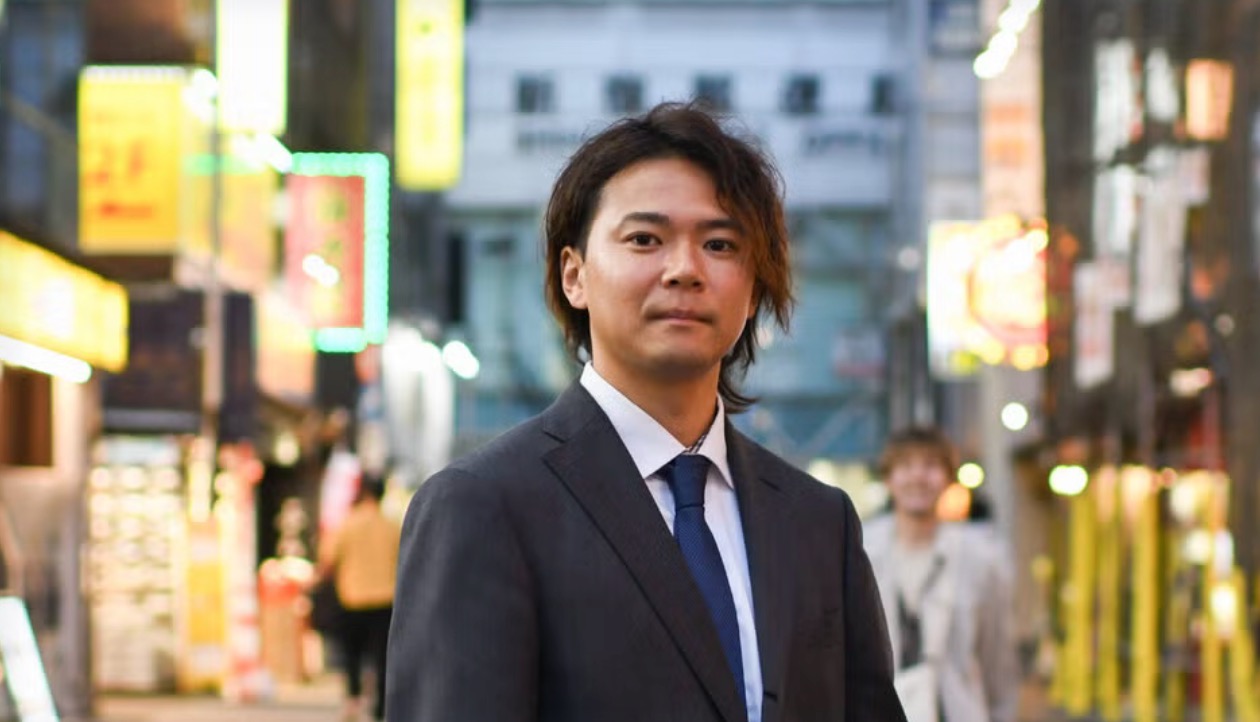
Among the new recruits was Taizen Yasuda. A soft-spoken 28-year-old, he said he had run out of patience for algorithm-driven romance.
“The process of endless matching, messaging and finally meeting on apps was exhausting,” Mr. Yasuda said. Matchmaking services, he thought, “would be the quickest way to find someone with the exact same goal — marriage.”
The practice is resurging as Japan grapples with a shrinking population and fewer young families. Because childbearing in Japan remains overwhelmingly tied to marriage, encouraging more people to wed has become part of the country’s broader push to boost its birthrate.
One company has positioned itself at the center of the matchmaking trend: IBJ, a Tokyo-based giant with a nationwide network. Promising to take clients from first meeting to proposal in three months, the company has seen membership and profits soar. It now claims a hand in roughly one of every 25 marriages in Japan.
Mr. Yasuda is part of a wave of young singles who have joined IBJ. On a recent Sunday, he sat across from his counselor in a quiet consultation room, clad in a stiffly pressed suit, with a sweep of wavy hair combed to the side. A little over a month after joining the matchmaking service, Mr. Yasuda had already narrowed his prospects to two women. He had just taken one on a weekend drive to see a field of yellow canola blooms.
His counselor put him through a mock date, testing how he would handle awkward questions while peppering him with encouragement — a tactic she described as discovering and cultivating a client’s “charm points.”
When she asked about his biggest stressors, Mr. Yasuda said delivering tough feedback to subordinates at work often weighed on him. Recently, though, it no longer bothered him. His counselor quickly interjected, cautioning that the response might sound passive or defeatist.
“You might need to follow up on that,” she said, before adding: “Anyway, I think you’re wonderful. I always think you’re wonderful!”
Such intensive coaching is central to IBJ’s pitch.
Every member is assigned a consultant who micromanages the courtship process. The consultants advise on everything from grooming and messaging etiquette to date itineraries.
When two members match, their consultants work in tandem behind the scenes, doing what they call “Cupid work” — exchanging and filtering postdate feedback and helping orchestrate every milestone, down to an eventual proposal.
“We are providing the kind of support only humans can offer to help people get married as quickly as possible,” said Shigeru Ishizaka, IBJ’s chief executive.
In an increasingly digitized society, “there is a deep desire to have a person guiding you through the process of dating,” said Junko Yamada, a lecturer at Tokai University in Tokyo who studies the psychology of romance. Echoing the reassurance of traditional omiai, she said having an expert curate matches offered psychological safety.
Ms. Yamada said that today’s youths seemed fixated on maximizing efficiency in every aspect of their lives, and that these agencies appealed to that mind-set by filtering out people who weren’t serious about marriage.
IBJ’s network of affiliated marriage agencies has varying costs and eligibility rules. Members typically pay about $30 to $100 a month, an enrollment fee of $650 to $1,300 and an additional $1,300 “success fee” if a couple get engaged. It also charges a $1,300 fee if couples violate its rules against “banned activities,” including premarital sex and cohabitation. IBJ said its counselors tracked the progression of their clients’ relationships.
Enrollment is generally limited to applicants with steady incomes. IBJ’s largest directly operated agency accepts only women ages 20 to 39 and men ages 25 to 49.
Critics argue that corporate services like IBJ, a company listed on the Tokyo Stock Exchange with annual revenue exceeding $130 million, strip the soul from traditional matchmaking, impose rigid timelines on anxious young adults and turn dating into a moneymaking endeavor.

Among the skeptics is Ikuko Kato, a veteran matchmaker who operates from her lace-curtained home just outside Tokyo, filled with hundreds of smiling pictures of couples she has matched. Dressed in pearls and a pink knit suit, Ms. Kato said she had matched more than 1,300 couples over 44 years and claimed that not a single pair had divorced.
“They’re too focused on business,” said Ms. Kato, who also charges clients a monthly fee as well as a fee if her matchmaking results in marriage. “My parents were neighborhood matchmakers. It’s in my blood. Modern corporate agents cannot do what I do.”
Over a nearly three-hour interview, she recounted case after case in which she had paired struggling singles and intervened in their marriages afterward.
One was a 4-foot-10 man who had struggled for three years at a marriage agency to find a date. Within three months, Ms. Kato said, he was married.
Her work did not end there.
Later, Ms. Kato called to check in on the newlyweds only to find out they were sleeping in separate bedrooms. “When I found that out, I shouted: ‘You fools! How are you going to have a baby?’” she recalled. “I ordered them, ‘Sleep in one bed tonight!’”
“With young people today, you really have to teach them that far,” Ms. Kato said.
IBJ represents a distinctly corporate evolution of that historically personal tradition.
Unlike neighborhood matchmakers, IBJ moves clients through a lucrative, end-to-end program. Beyond matchmaking, its group companies offer wedding planning, financial consulting and housing services, along with referrals to affiliated businesses like eyebrow-grooming salons.
Membership has grown about 50 percent over the past five years, and IBJ reported a 44 percent jump in first-half revenue this year, to about $91 million.

Mr. Ishizaka, the chief executive, said he viewed IBJ’s mission as more than just money. When he left banking and entered the matchmaking industry in 2000, he said, he hoped to reverse Japan’s severe demographic decline.
“Since Japanese society rarely conceives children outside of wedlock, I realized a matching service specifically focused on marriage would have a vital future,” he said.
Recently, that mission got a dose of encouraging news. In the first six months of 2026, births in Japan rose 0.8 percent, the first increase in 11 years for that period, according to the Ministry of Health, Labor and Welfare. The modest uptick followed two straight years of increased marriages.
Mr. Yasuda, the IBJ client, said he hoped to contribute to those numbers. Part of his desire to marry quickly, he said, comes from wanting to start early enough to raise three or four children.
Mr. Ishizaka sees clients like Mr. Yasuda as evidence that a generation frequently portrayed as retreating from marriage may instead be looking for a more efficient route toward it.
“Surveys consistently show that over 80 percent of young people say they want to marry if they find the right partner,” he said. “I am certain that every married couple we create contributes directly to reversing the birthrate decline.”
River Akira Davis covers Japan for The Times, including its economy and businesses, and is based in Tokyo.
Kiuko Notoya is a Tokyo-based reporter and researcher for The Times, covering news and features from Japan.